In the ’80s, almost anything could become a cartoon for kids — including an R-rated action hero like John Rambo. And pretty much nobody was more unhappy about it than Sylvester Stallone.
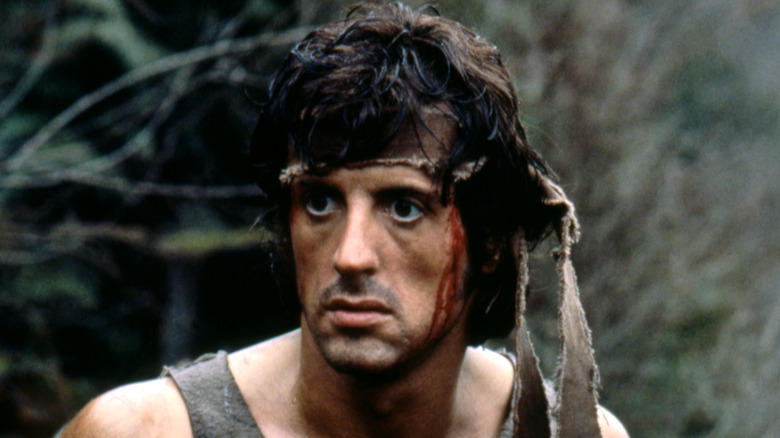
The eventual “Tulsa King” star headlined and co-wrote the 1982 adaptation of David Morrell’s “First Blood,” a harrowing story about a Vietnam veteran who was pushed over the edge by a small-town sheriff and his men before responding with escalating violence.
Unlike the novel, Rambo survived the events of the film, which allowed Stallone to return for “Rambo: First Blood Part II” in 1985. The animated series “Rambo: The Force of Freedom” made its debut the following year, and Stallone didn’t sugarcoat his feelings about it.
“They’re going to make this Saturday morning TV cartoon show for kids with what they tell me is a softened version of Rambo doing good deeds,” Stallone told the Chicago Tribune in 1986. “First of all, that isn’t Rambo, but, more [importantly], they tell me I can’t stop them because it’s not me [they’re] using; it’s a likeness of a character I played and don’t own.”
Stallone was even more adamantly against the Rambo action figures that were marketed to children.
“It’s not for kids,” said Stallone. “The movie was not supposed to be for little kids, and I wouldn’t let my own children play with those toys. What more can I say? I’m very embarrassed about it. It has people thinking and saying terrible things about me.”
The Force of Freedom
The irony of Sylvester Stallone’s opposition to “Rambo: The Force of Freedom” is it put him on the same side as organizations that had been accused of wanting to censor of violent entertainment. Advocates pushing for quality kids’ TV — already miffed about the constant fighting and product promotion in “He-Man” and “G.I. Joe” — were not receptive to the notion of a “Rambo” cartoon.
”Wouldn’t you know they would pick up on that movie to turn into a children’s toy and a children’s hero,” Peggy Charren, president of the nonprofit Action for Children’s Television, told the New York Times. ”The problem with Rambo as a doll is it’s a doll for children, whereas the movie is … for adults.”
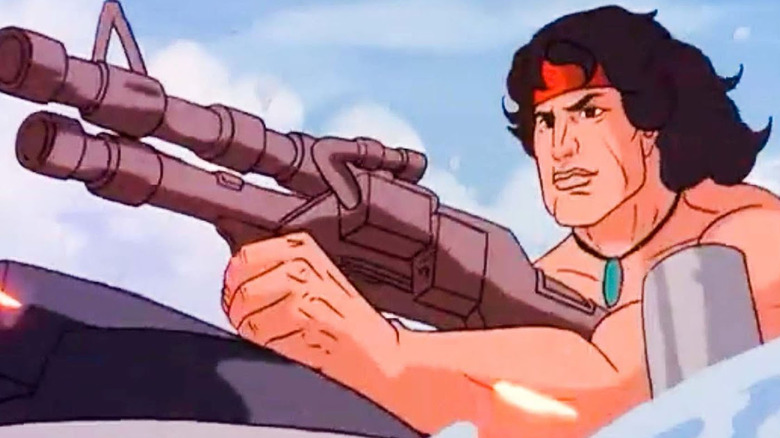
Unlike “G.I. Joe,” “Rambo” featured the use of real weapons but avoided depicting life-threatening injuries. Like “G.I. Joe,” the series had its own terrorist organization to fight: S.A.V.A.G.E., a.k.a. the Specialist-Administrators of Vengeance, Anarchy and Global Extortion. The show also had some wildly over-the-top action sequences, including Rambo disarming a missile while riding it through the air.
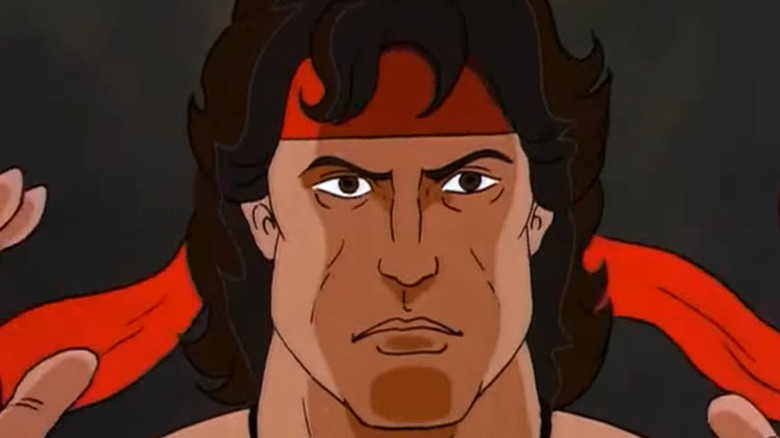
Neil Ross — a frequent voice actor for “G.I. Joe,” “Voltron,” and more — portrayed a less tortured version of Rambo who was often accompanied by a young engineer, Edward “Turbo” Hayes (as voiced by “Fresh Prince of Bel-Air” actor James Avery), and master of disguise Katherine Anne “K.A.T.” Taylor (Mona Marshall).
The initial tone of the series was more grounded than some of its animation contemporaries, but the show gradually featured more fantastical plots and villains.
The fall of and rise of Rambo
The first five episodes of “Rambo: The Force of Freedom” debuted in April 1986, while the remaining 60 episodes of Season 1 began airing on September 15, 1986. According to head writer Mike Chain, the show’s initial ratings success ultimately attracted the wrong kind of attention.
“ABC was scared of getting death threats and people talking about violence in children’s television and all that stuff,” Chain told Topless Robot. “I didn’t want ‘Rambo’ to have an adverse effect on the psyche of children. I wanted to create positive role models and teach morals on the show. Every episode had a moral to it.”
“Rambo” didn’t continue after its first-run episodes were completed. According to a subsequent report in The Hartford Courant, Coleco put up $15 million to produce “Rambo: The Force of Freedom” but barely recouped its investment.
Despite that bump in the road, Sylvester Stallone went on to make three additional “Rambo” movies. In early 2026, production began on a “Rambo” origin movie led by “The Recruit” star Noah Centineo.